
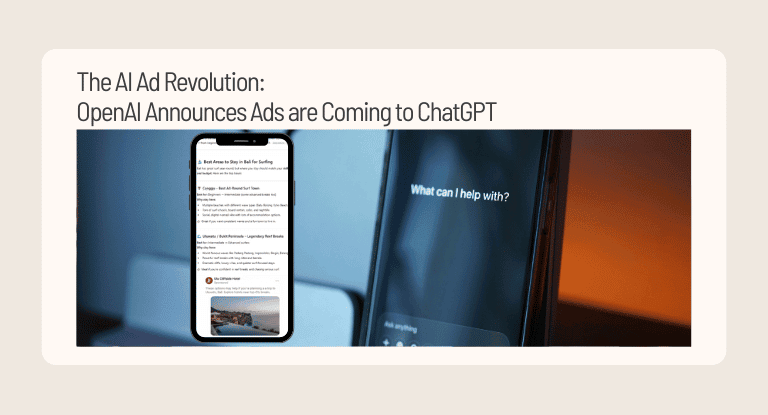
The days of interacting with AI without ads are slowly drawing to a close. OpenAI, the creator of ChatGPT, has announced that they have been exploring and testing ad placements in its popular AI chat platform. The planned roll-out is part of their plan to make AI “accessible to everyone through a free product and low-cost subscription tier, ChatGPT Go”, which launched itself in August last year.
Whilst the ads aren’t currently implemented in the platform, OpenAI are actively testing the concept, and it is likely that we will see the implementation of this over the coming months. OpenAI’s implementation of ads will likely set the foundation for how other AI platforms and owners, including Google and their Gemini AI, implement ads going forward.
OpenAI’S Approach to Ads in ChatGPT
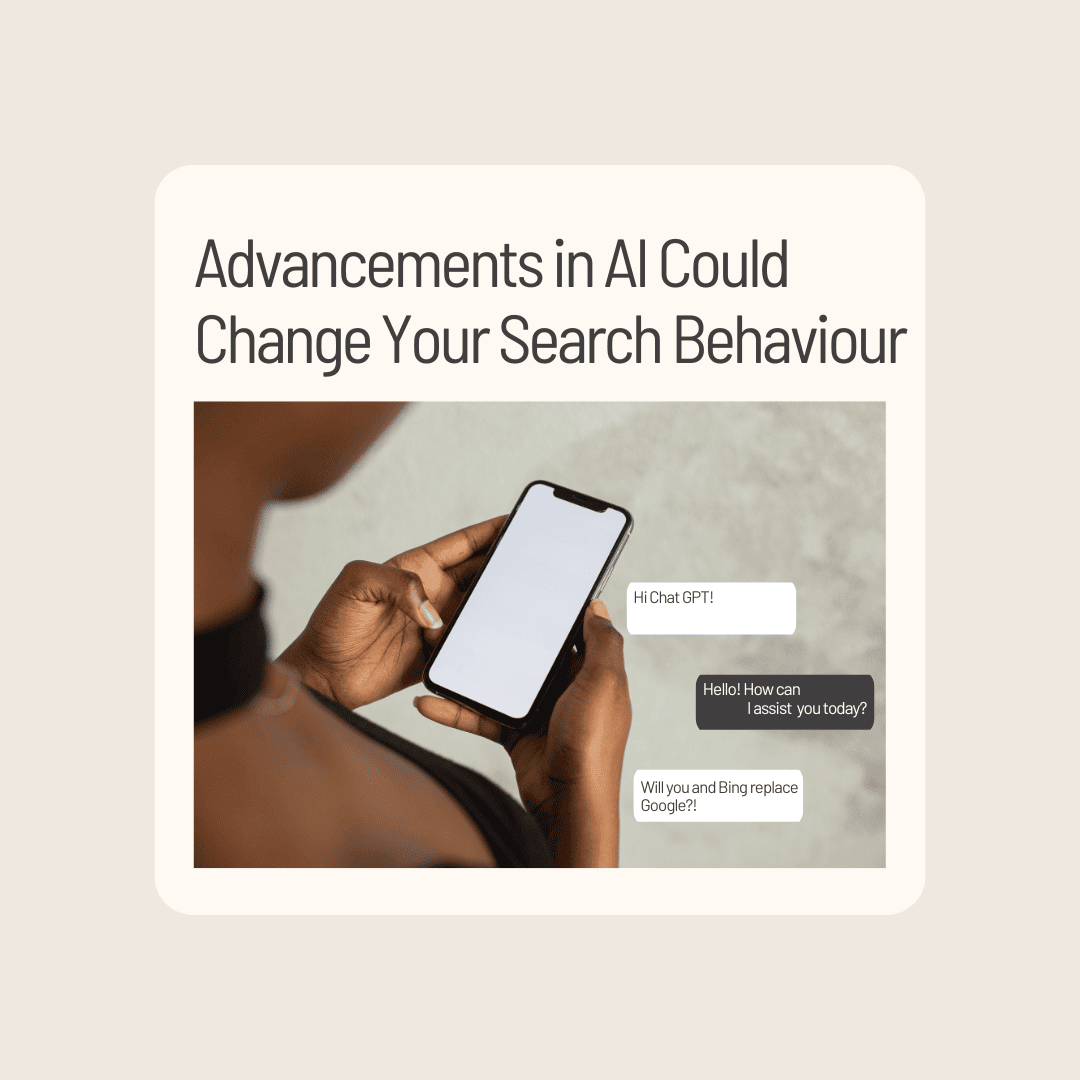
Open AI don’t plan to roll out ads in a standard form, such as a static banner. They are looking to build the ads in a conversational way that allows users to interact accordingly.
Conversational interfaces create possibilities for people to go beyond static messages and links. For example, soon you might see an ad and be able to directly ask the questions you need to make a purchase decision.”
They want ad interactions to be seamless and to ensure that they benefit users and that ads themselves aren’t influencing results. They claim that ads will always be separate and clearly labelled. OpenAI is also focusing on user choice and control.
“You control how your data is used. You can turn off personalisation, and you can clear the data used for ads at any time. We’ll always offer a way to not see ads in ChatGPT, including a paid tier that’s ad-free.”
How Will The Ads Look?
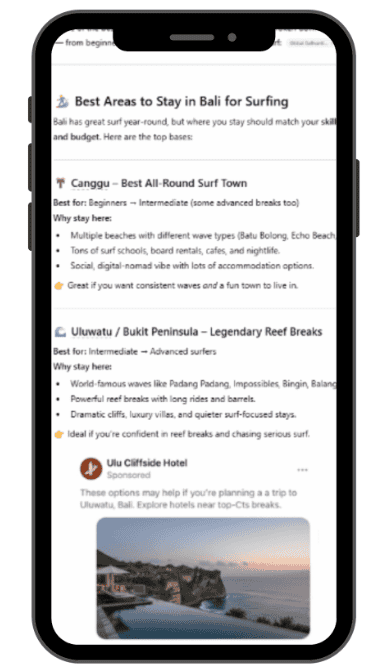
If you were to ask ChatGPT for a recipe for lasagna, on top of providing you with instructions on how to make a lasagna, you would be shown options on where to purchase the ingredients nearby in ads from local grocery stores. Or perhaps you are asking for recommendations on the best areas in Bali to surf. It is likely that ChatGPT suggests Uluwatu or Canggu while also containing an ad for local hotels in those areas. Clicking on the ad will then seemingly engage with options relating to the hotel, such as the AI asking what dates you wanted to travel.
Conversational interfaces create possibilities… soon you might see an ad and be able to directly ask the questions you need to make a purchase decision.”
Will We See Ads in Google Gemini in 2026?
All eyes will rightfully be on Google. Whilst we have already started to see the implementation of ads in some of Google’s AI properties (such as SGE and AI Overviews), we are yet to see any implementation or plans to add the ads to Google’s conversational AI model, Gemini.
Google are likely watching the space to see how OpenAI’s launch goes before implementing ads into Gemini. For Google, the process won’t be as long-winded to implement. Google already has a large customer base of advertisers, and any rollout would likely be easy to implement, while the likes of OpenAI are jumping into an advertising area that they 1) don’t have existing experience in and 2) need to gain trust from advertisers. If ChatGPT ads are successful, it wouldn’t take much for Google to implement ads into Gemini and attract its already established advertisers.
Daisy Digital – Staying Ahead of the Curve
At Daisy Digital, we always prioritise staying ahead of the latest trends in both search and AI. In 2025, our SEO team did a deep dive into how LLM AI platforms read and present data from the web to ensure our brands are able to be cited through AI chats and Google’s AI Overviews.
As conversational ads roll out across Australia in 2026, our team will be monitoring these developments, ensuring that we both understand these products and how they work and that we offer these advertising options to suitable clients who will see positive results from this new ad format.